
0

How a Hotel Gets Its Own Coffee Table Book
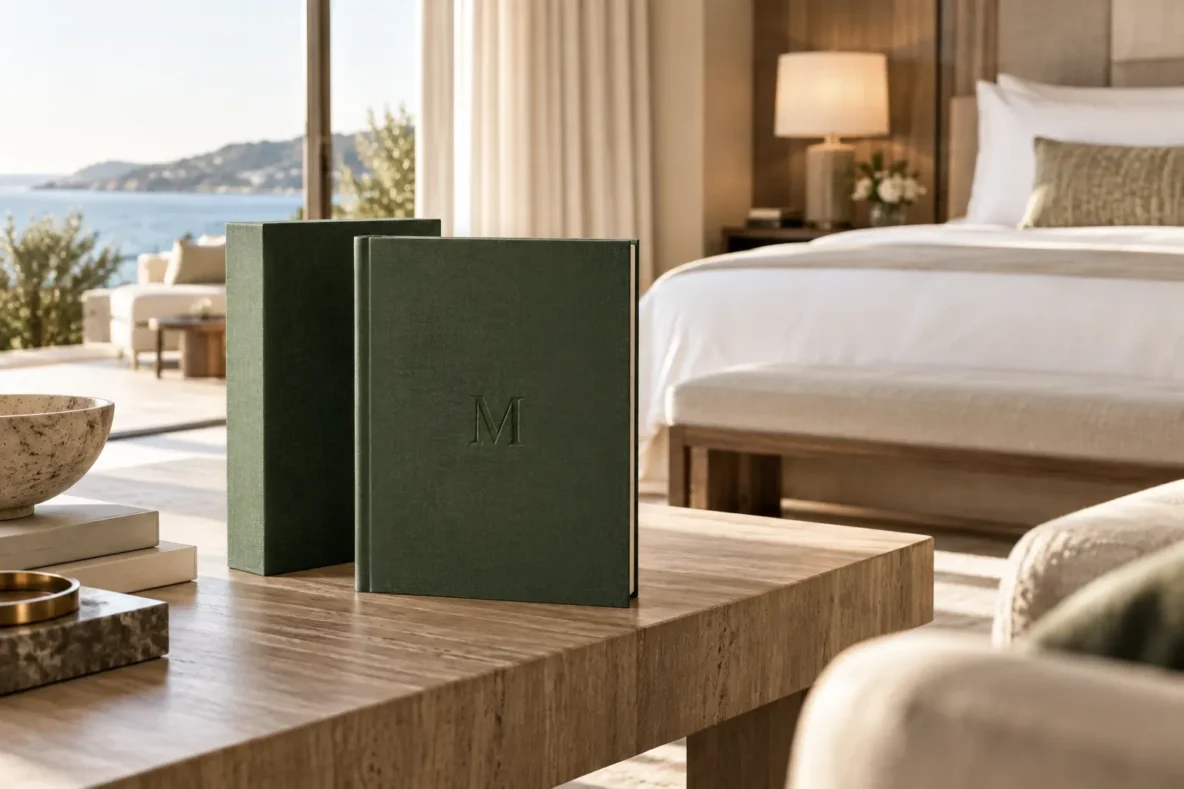
A hotel coffee table book is a book about one property, made for that property: the rooms, the land, the kitchen and the people, bound as a hardcover and placed in the suite, the press kit or the guest’s luggage. Most hotels get one by commissioning it directly from a bindery, not by waiting for a publisher.
Walk into almost any good suite and there is a book on the table.
Usually it belongs to someone else. A fashion house, a famous photographer, a city guide.
It looks right. It says nothing about the place the guest is sleeping in.
What a hotel book is for
A hotel book does three jobs, and most properties start with one.
The in-room copy. The property photographed the way the guest will remember it, on the table in the suite. Guests read it on the first night, and some ask to buy it.
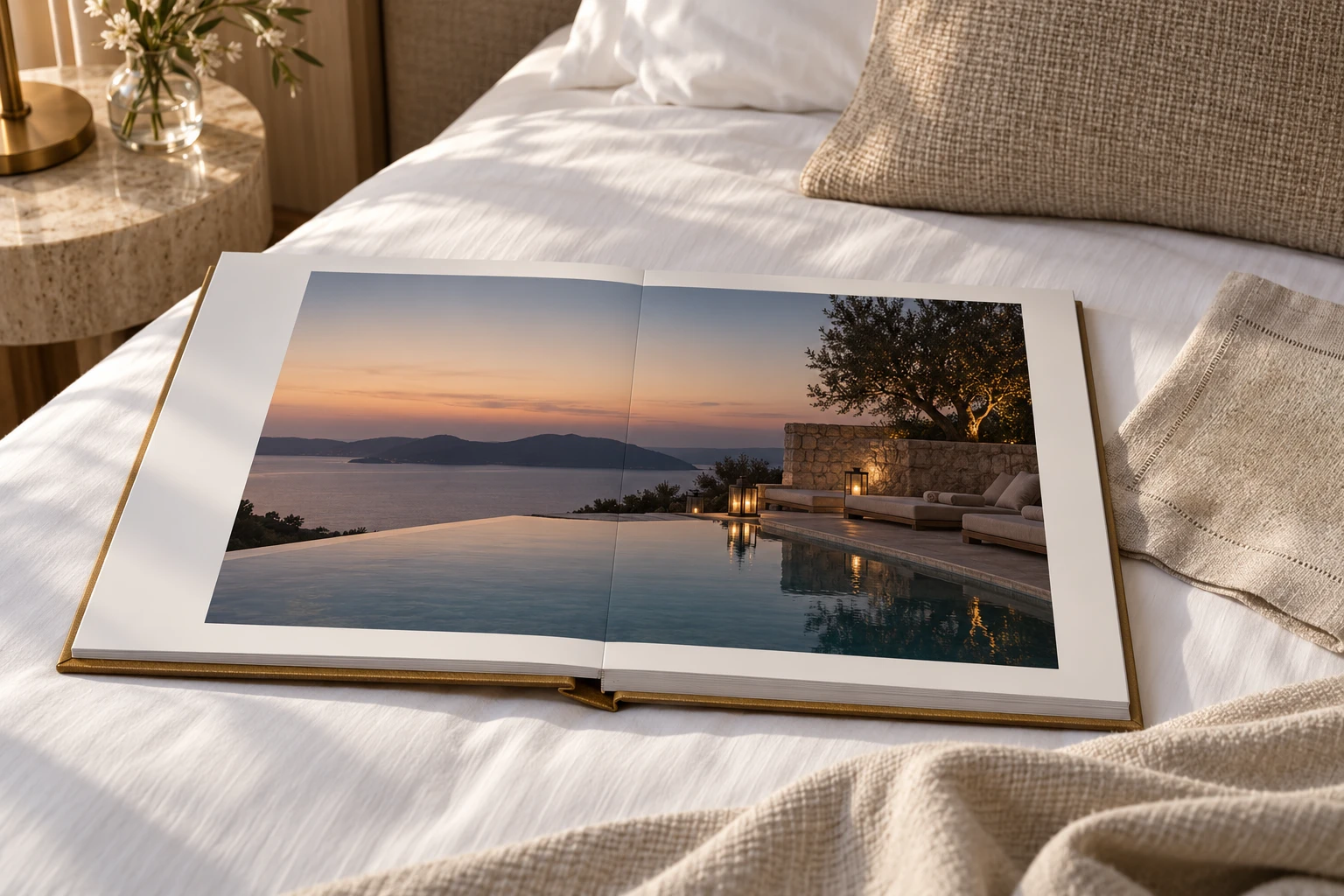
The brand book. A copy for the press, the travel advisor, the owner or the developer. A PDF gets closed after the meeting. A book stays on the desk.
The guest gift. A book made for the family who took the whole villa for a week, sent home after they leave. That is the amenity people talk about at dinner.
Why publishers rarely take hotel commissions
A publisher makes a book when it believes strangers will buy it in a bookstore.
That is the whole model: one title, a large print run, distribution, and years of sales to pay it back.
A single hotel rarely fits it. The audience is the property’s own guests, the run might be forty copies, and the book has to be ready for an opening date, not a publishing season.
Some publishers do take private commissions, on their own terms and their own calendar. Many properties find the door closed or the timeline too long.
The other route is direct: the hotel owns the photographs, a designer lays them out, and a bindery makes the books.
That route has no minimum print run, and the property keeps control of every page.
Start with the photography you already have
Most hotels already own the pictures.
The opening photographs, the restaurant launch, the seasonal campaign, the drone flight over the grounds. It sits in a folder, used once on the website.
A book gives that work a second life. A good designer can build forty spreads from an archive the marketing team has stopped looking at.
If something is missing, it is usually people: the chef, the head gardener, the concierge who has been there twenty years. Photographing them is the one session worth planning.
Decide how many copies, and where they live
Count the places the book will sit.
One for the signature suite. One for every room. A stack in the boutique. A few for the owner’s office and the sales team.
A handmade book is made one copy at a time, so a property can start with the suites and add the rest of the rooms later from the same design.
For a group, one base design carries the brand and each property gets its own pages and its own name on the cover. Developers and branded residences use the same approach for custom property books.
Choose the cover like you chose the lobby
The cover is the first thing a guest touches.
Genuine Italian leather for the suite copy. Dutch linen for a softer, residential feel. A photographic cover when the property’s view should do the talking.
Then the mark. Blind or foil debossing puts the property’s name on the cover the way it sits on the gate.
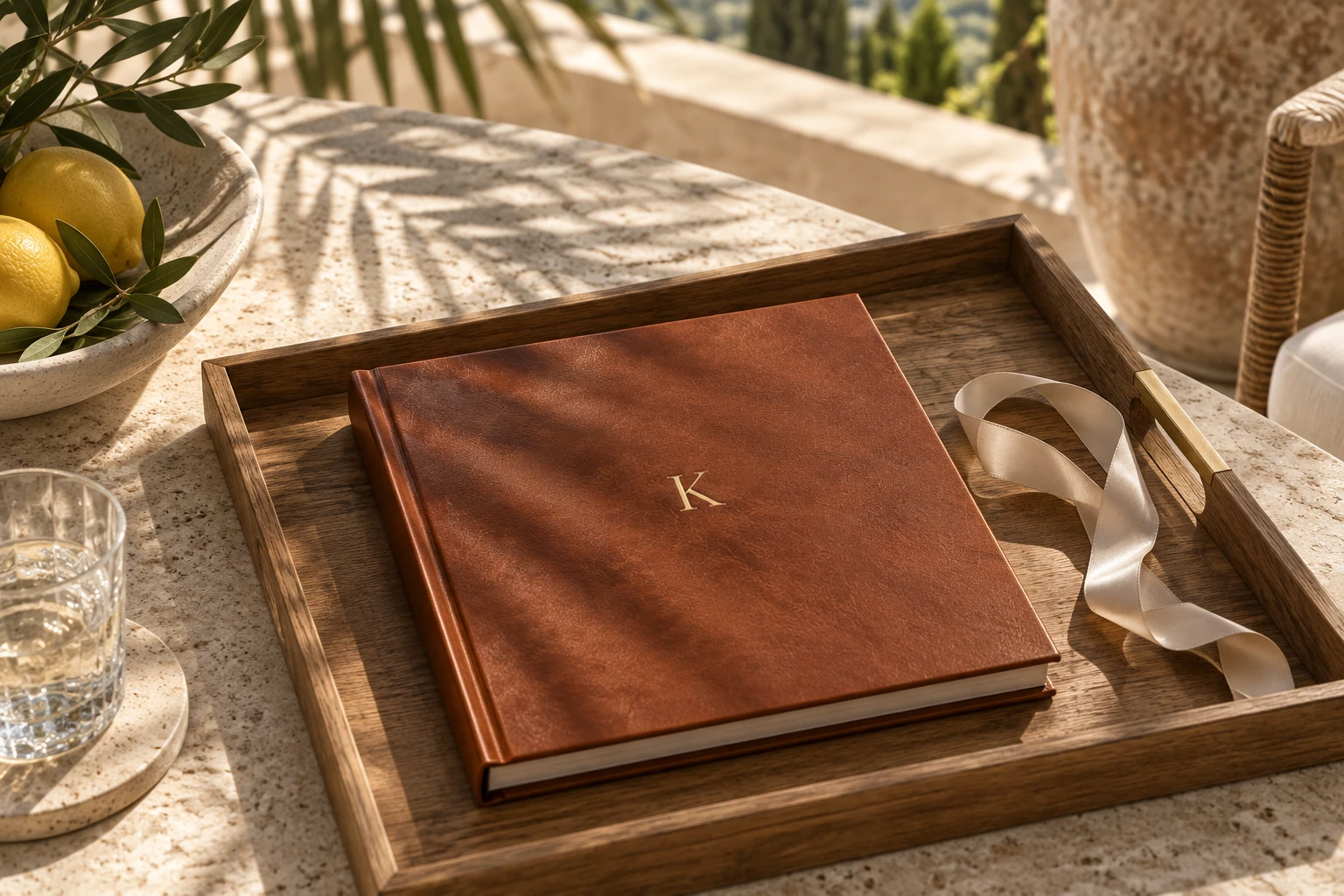
A slipcase or a wood presentation case turns the gift copy into an object the guest keeps on a shelf for years.
How long it takes
Plan backward from the date that matters: the opening, the anniversary, the press trip.
Design and proofing usually take the longest, because the property is choosing its own story.
Production is the quick part. At KONPOLI, a single copy is produced in 12 business days after proof approval. Larger runs and large formats are scheduled per project, and every quote includes its timeline.
What to have ready for the first conversation
You do not need a finished brief. You need four answers.
- Where the book will live: the suite, the press kit, the guest’s luggage, or all three.
- How many copies, roughly.
- What photography exists, and who owns it.
- The date it has to be in hand.
With those, a bindery can show you formats and materials and give you a real quote.
How KONPOLI makes hotel books
We make custom books for hotels and resorts, lodges and private stays, bound by hand in our own European workshop, which has been binding for more than 45 years. They sit alongside the rest of our custom coffee table books.
Our design team works from the photography you own, or we bind from your print-ready files. Every project is quoted individually, and finished books ship worldwide from Miami.
If you are in Miami, come to the showroom in Wynwood by appointment and hold the formats before you choose.
When you are ready, start the conversation.
Frequently asked questions
How much does a hotel coffee table book cost? Every project is quoted individually, based on format, cover material, page count and the number of copies. The conversation starts with the property.
Is there a minimum order? No. Each book is made one at a time, so a hotel can order one copy for the signature suite and add more later from the same design.
Can guests buy the book? Yes. Many properties keep copies in the boutique or at the front desk, made from the same design as the in-room copies.
Do we need a professional photographer? Usually not for the whole book. Most hotel books are built from photography the property already owns, with one planned session for the people behind the place.
Can a hotel group have one design for every property? Yes. One base design carries the brand, and each property gets its own pages, cover photograph and debossed name, so the books read as a family.
Edgar Galeyev runs KONPOLI USA, which makes handcrafted albums for professional photographers and custom coffee table books to commission, bound in its own European workshop for 45 years, with a showroom in Miami.
See KONPOLI first in your Google results: